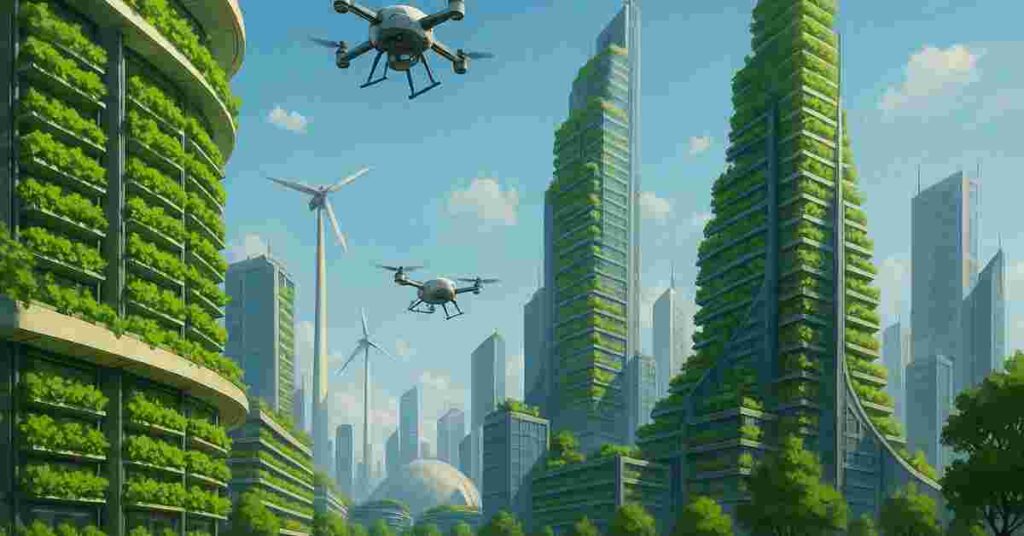
As the global population approaches 10 billion and farmland becomes increasingly scarce due to climate change and urban sprawl, a new method of food production is emerging: vertical farming.
Vertical farming isn’t just a buzzword. It’s a transformative agricultural method addressing land scarcity, food security, and sustainability in urban and resource-challenged regions.
Whether you’re an urban farmer, agri-entrepreneur, student, or just curious about the future of farming, this guide is your seed to understanding how vertical farming works and why it matters.
Vertical farming is the practice of growing crops in vertically stacked layers, often in controlled indoor environments, using technology to optimize plant growth.
Vertical farming refers to growing plants in vertically stacked layers rather than traditional horizontal rows across vast fields. This method is typically used indoors in controlled environments like warehouses, greenhouses, or specially designed buildings. It’s a space-efficient, high-tech approach that often uses hydroponics, aeroponics, or aquaponics, which don’t require soil.
The idea gained global attention in 1999, thanks to Dr. Dickson Despommier, who proposed it as a solution for urban food insecurity.
With the advancement of LED lighting and automation technologies in the 2010s and 2020s, vertical farming has become more practical and scalable.
The Core Concept: How Vertical Farming Works
Vertical farming fundamentally reimagines how food is produced. Rather than relying on traditional, horizontal farmland that stretches across acres and is exposed to unpredictable weather, vertical farming stacks crops in controlled indoor environments.
This shift in orientation—from outward to upward—enables farmers to grow crops in shelves, towers, or walls using significantly less land. Instead of relying on sunlight and seasonal changes, crops are nurtured under artificial grow lights and carefully regulated environmental controls.
This model not only increases productivity but also minimizes risks associated with pests, drought, or extreme weather. Since the entire system is sealed off from outdoor exposure, it also reduces the need for pesticides and herbicides.
Key Components of a Vertical Farming System
Understanding how vertical farming works means knowing what powers it. Here’s a deeper look at the major components that make this farming method successful:
This is the foundational design of vertical farming. Instead of spreading crops out over acres, farmers use multi-level shelves, towers, or wall structures to grow upward. This technique drastically increases the amount of food that can be grown per square foot—ideal for areas with limited land.
CEA systems allow farmers to control all aspects of the growing environment, including:
This full control means crops can be grown year-round with consistent quality and yield.
Plants indoors can’t rely on sunlight, so they get their energy from LED grow lights. These systems:
Efficient lighting is essential for driving plant growth and saving energy.
Rather than soil, vertical farms use water-based methods:
These systems help reduce water usage and eliminate soil-borne pests.
Modern vertical farms rely on technology to streamline operations and maximize yields:
Together, these tools create a smarter, faster, and more reliable farming system.
Starting a vertical farm may seem complex, but breaking it down into clear steps makes it much easier to understand. Here’s a simplified explanation of the process from setup to harvest:
This cycle can be repeated multiple times a year, making vertical farming both productive and sustainable.
While vertical farming offers many benefits, it’s not without its difficulties. New farmers and investors need to consider some of the practical and financial hurdles that come with this modern method of growing food.
Vertical farming is not just a futuristic idea, it’s already happening around the world. Here are some real-world examples that show how different companies and countries are using this innovative approach to grow food more efficiently.
AeroFarms, based in New Jersey, USA, is one of the world’s most well-known vertical farms. They use a method called aeroponics, where plant roots hang in the air and are misted with a nutrient-rich solution. This allows them to grow leafy greens like arugula and kale using 95% less water than traditional farming, and without using soil.
Plenty, located in California, USA, is another vertical farming company focused on technology. Backed by major investors like Jeff Bezos, Plenty builds high-tech indoor farms near cities to grow fresh, local produce. They use artificial intelligence and robotics to make their farms efficient and scalable.
Bowery Farming, also in the USA, is known for using AI and data science to monitor and improve crop growth. Their indoor farms supply fresh greens to grocery stores and restaurants, especially in urban areas where space is limited.
In Singapore and Japan, vertical farming has become a practical solution to food security challenges. With limited land and high population density, these countries have turned to indoor farming on rooftops, in basements, and even in abandoned buildings to produce food locally. Their government support and innovation have made them leaders in urban agriculture.
These case studies show that vertical farming can succeed in different settings, from tech-heavy warehouses in the U.S. to compact city farms in Asia, making it a truly global solution for the future of food.
Setting up a vertical farm can be either affordable or expensive, depending on your goals and scale. Here’s a breakdown to help you understand what to expect:
For beginners or small-scale growers looking to experiment at home, the cost is relatively low. A basic setup might range from $500 to $5,000, including items like racks or shelves, LED grow lights, a simple hydroponic system, and a fan or air circulation device. These home or pilot systems are perfect for learning the basics and growing crops like herbs and leafy greens.
On the other hand, building a commercial vertical farm for serious business purposes can range from $100,000 to over $1 million, depending on the level of technology and size of the facility. A typical cost breakdown for a commercial setup includes:
While these numbers may seem high, vertical farms can become profitable if operated efficiently. The return on investment (ROI) typically takes about 3 to 5 years, depending on the crops grown, local demand, and operational efficiency. High-value crops like microgreens and herbs can offer faster payback than bulk produce.
In summary, vertical farming can start small and scale up with your ambitions and resources.. Is Vertical Farming Profitable?
Yes, if done strategically.
Vertical farming and traditional farming are two very different methods of growing food. To help you understand the key differences, here’s a simple comparison:
Here’s a side-by-side summary table:
| Feature | Vertical Farming | Traditional Farming |
| Land use | Very Low | High |
| Water use | Minimal | High |
| Climate Dependency | None | High |
| Crop Cycles | Multiple per year | Seasonal |
| Pesticide Use | None (indoors) | Moderate/High |
| Feature | Vertical Farming | Traditional Farming |
| Land use | Very Low | High |
| Water use | Minimal | High |
| Climate Dependency | None | High |
| Crop Cycles | Multiple per year | Seasonal |
| Pesticide Use | None (indoors) | Moderate/High |
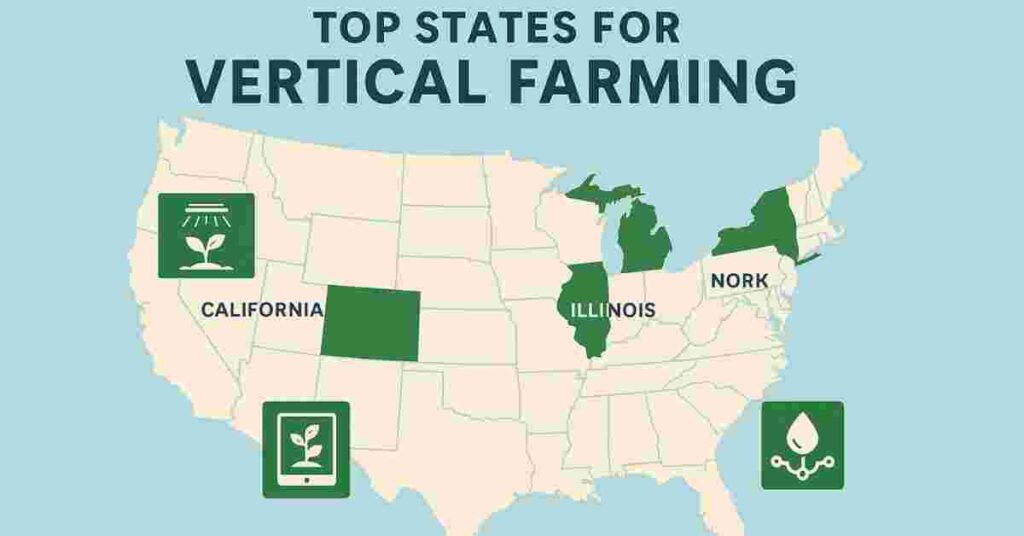
Vertical farming in the United States is gaining momentum due to increasing urban populations, technological advancements, and the demand for local, fresh food. Cities like New York, Chicago, and San Francisco are seeing a rise in high-tech indoor farms. These facilities are receiving support from government grants, private investors, and green energy initiatives. In the coming years, vertical farming is expected to become more integrated with smart cities, using AI, sensors, and data analytics to improve crop yields and reduce waste. The U.S. is also focusing on food security and reducing the carbon footprint of agriculture, making vertical farming a key part of future food strategies.
Globally, vertical farming is emerging as a vital solution for countries with limited arable land and high population density. Nations like Singapore, the Netherlands, Japan, and the UAE are investing in vertical farming to enhance food self-sufficiency. These countries are adopting vertical farms in urban buildings, rooftops, and even underground spaces. Innovations in renewable energy, water recycling, and LED efficiency are making global vertical farms more sustainable and cost-effective. With climate change threatening traditional agriculture, vertical farming offers a resilient and controlled environment for food production worldwide.
A: Leafy greens, herbs, microgreens, strawberries, and mushrooms are ideal.
A: Small setups start at $500, while commercial farms may need over $100,000.
A: Microgreens, basil, arugula, mint, and specialty herbs fetch high prices.
A: It can be, but certification depends on inputs and practices.
A: Yes! Home kits and DIY hydroponic towers make it possible on balconies or indoors.
Vertical farming represents a smart, scalable solution to modern agriculture’s biggest problems. While the upfront investment is high, the long-term benefits, especially in urban and tech-forward settings, are compelling.
If you’re passionate about sustainability, food innovation, or urban development, vertical farming might just be your perfect growth opportunity.